
Disclosure: As an Amazon Associate, Fetchvera earns from qualifying purchases. We compare published specs. We don’t test products in a lab, and every figure below comes from the manufacturer or a major retailer.
Self-Cleaning Litter Boxes: How They Work and Whether They’re Worth It
A self-cleaning litter box promises the end of daily scooping. The reality is more specific: these machines trade one chore for different ones: emptying a waste drawer, buying proprietary trays, and finding floor space for a device the size of a small ottoman. Here’s how the two main designs work, what they actually cost over a year, and an honest comparison of the best-known models.
The two ways they clean themselves
Every automatic litter box on the market uses one of two mechanisms. Understanding the difference explains most of the price gap.
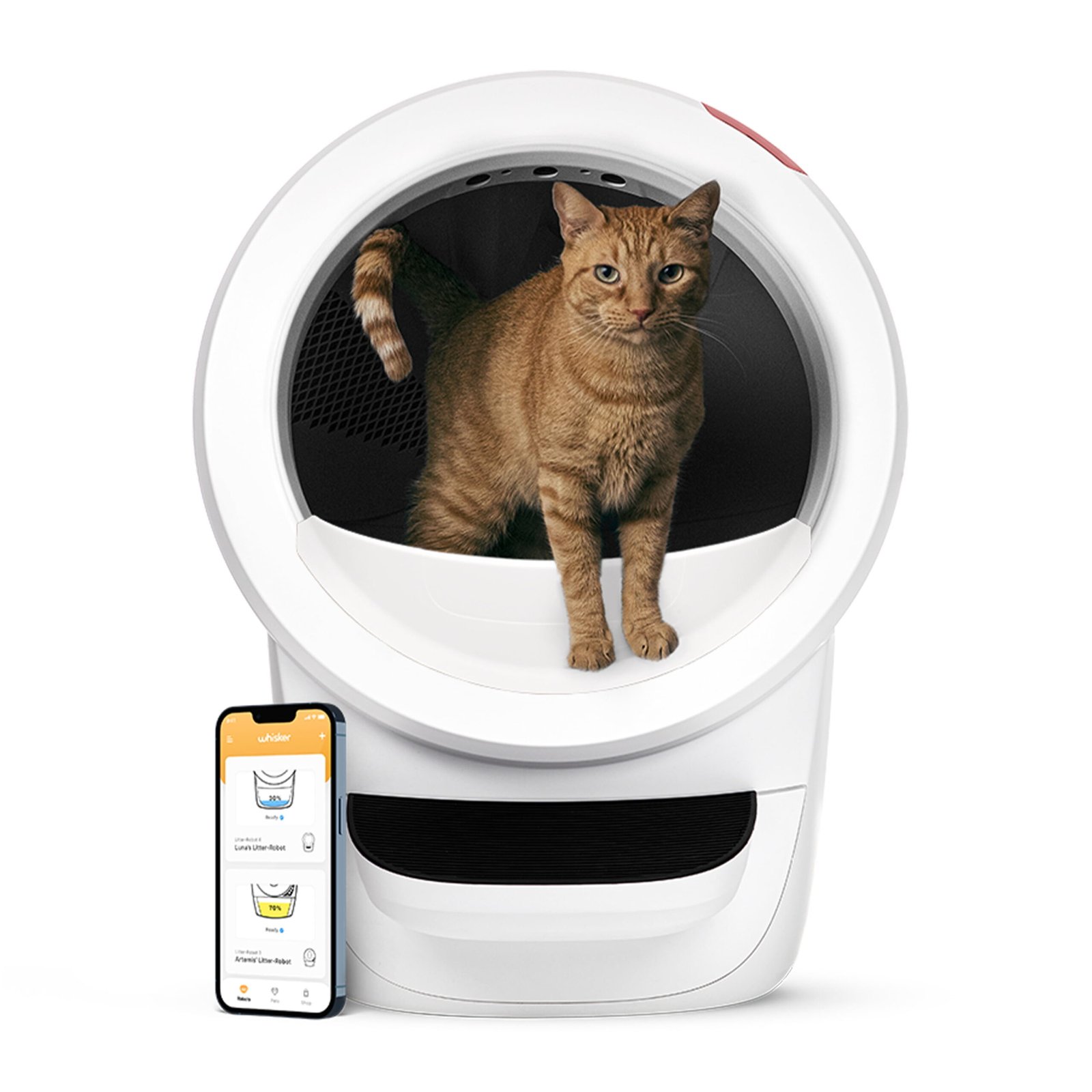
Globe sifting. The box is a large sphere that rotates after your cat leaves. Clumps get sifted through a screen and drop into a sealed drawer below; clean litter stays in the globe. The Litter-Robot 4 is the reference design here. Per Whisker’s published specs it has a 22 by 27 inch footprint, stands 29.5 inches tall, and offers a 15.75-inch square entryway. Sensors (laser plus weight, which Whisker calls OmniSense) detect the cat and pause the cycle while anyone is inside.
Rake and tray. A motorized rake sweeps through the litter on a timer, pushing solids into a covered waste compartment. The litter itself is crystal, not clay, which absorbs urine and dehydrates solids. The PetSafe ScoopFree Crystal Pro is the standard example: about 28 by 20 by 16 inches, 18 pounds, with motion sensors and a health counter that logs how often your cat visits.
The practical difference: globe sifters work with regular clumping litter and seal waste in a drawer you empty weekly. Rake systems need the brand’s own crystal trays, which you replace every few weeks. The machine is cheaper; the consumables are the ongoing bill.
Cycle timing is the detail that decides whether the machine fits your home. Both designs wait after the cat leaves, typically several minutes, so litter has time to clump or the cat has time to return. The actual cleaning cycle then runs for one to three minutes depending on the model. If the litter box sits near a bedroom or a home office, that nightly whir matters more than any spec on the box. Place the unit where a 2 a.m. cleaning cycle won’t wake anyone, and where the cat won’t be startled mid-visit by a motor kicking in.
What to check before you buy
Cat weight limits. Automatic boxes have minimums because the sensors need to tell a cat from a settling pile of litter. Whisker lists a 3-pound minimum for the Litter-Robot 4, which rules out very young kittens. PetSafe recommends 6 months and up for the ScoopFree line.
Litter lock-in. The ScoopFree only works with PetSafe crystal trays. Standard clay litter will jam the rake. The Litter-Robot 4 takes most clumping litters, which keeps your options open and your per-month cost lower. If your cat is picky about litter texture, this matters more than any feature list: some cats refuse crystal litter outright.
The real first-year cost. Add it up before comparing sticker prices: the machine, plus a year of consumables (crystal trays or drawer liners and litter), plus electricity (trivial, but the box needs an outlet nearby). A rake box with monthly tray replacements passes a globe box on total cost somewhere in the second year, even though the globe box costs roughly three times more upfront. Neither is the “cheap” option. They’re the convenient option, and the honest way to compare them is total cost over the time you’ll own the machine, not the number on the box.
Space and placement. Measure first. The Litter-Robot 4 needs a 22-by-27-inch footprint plus clearance for the globe to rotate and for you to open the drawer. These are not tuck-behind-the-toilet devices. They also need a wall outlet within cord reach, and the cycle makes noise, which matters if the box lives near a bedroom.
Head to head: the two to compare
| Litter-Robot 4 (Whisker) | PetSafe ScoopFree Crystal Pro | |
|---|---|---|
| Cleaning method | Rotating globe sifts clumps into sealed drawer | Motorized rake pushes waste into covered trap |
| Litter type | Most clumping litters | PetSafe crystal trays only |
| Size | 22 x 27 x 29.5 in, 24 lbs | 28.2 x 20.4 x 16 in, 18 lbs |
| Cat minimum | 3 lbs (per brand) | 6 months old (per brand) |
| App / tracking | Whisker app: usage, weight, waste level | Health counter + motion sensors (Smart version adds app) |
| Trial | 90-day in-home trial | Retailer return window |
| Price | Check price on Amazon | Check price on Amazon |
Figures as published by the brands and major retailers.
Litter-Robot 4: the full-service option
The Litter-Robot 4 is the most capable machine in the category and priced like it. The globe design means no proprietary litter. You keep buying whatever clumping litter your cat already likes. The sealed drawer holds about a week of waste for one cat, and the carbon filter keeps odor down between emptyings. The Whisker app tracks visits and weight, which is genuinely useful for spotting health changes early.
The honest downsides: The Litter-Robot 4 costs a lot for a litter box. It’s big, genuinely furniture-sized, And while the safety sensors are well regarded, some cats never take to the globe shape or the rotation noise, which is what the 90-day trial is for. Use it.
Good fit if: you have one to four cats, your cats accept clumping litter, and you want the lowest ongoing cost per month after the upfront hit.
Skip if: floor space is tight, your cat is under 3 pounds, or the upfront price stings. The ScoopFree does the core job for a third of the price.
PetSafe ScoopFree Crystal Pro: the simpler routine
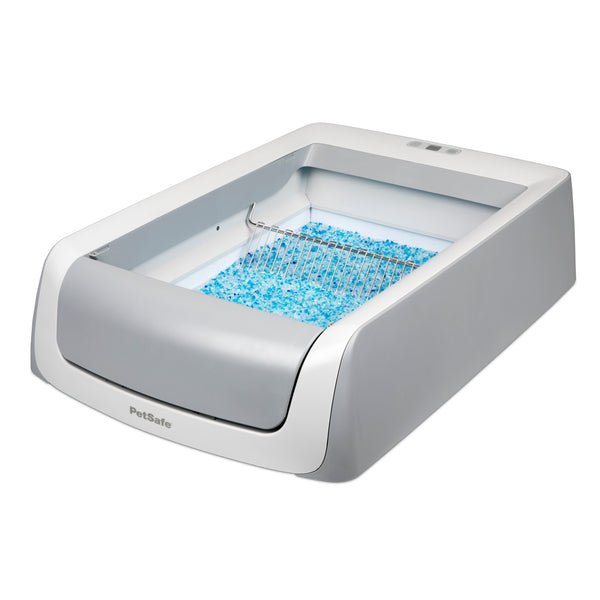
The ScoopFree takes the opposite approach: a familiar rectangular box with a rake that runs on a timer after each visit. Crystal litter absorbs urine on contact and dehydrates solids, so there’s no clump to scoop. You swap the disposable tray every few weeks and you’re done. The health counter logs visits, which gives you the same early-warning benefit as an app, minus the phone.
The tradeoff is the tray subscription in disguise. Crystal trays are proprietary, and a multi-cat household burns through them faster than the “weeks” on the box suggests. Budget for a tray replacement every few weeks when you do the math. The per-tray cost adds up over a year. Also note the litter itself: crystal feels different under paws, and some cats reject it. Keep the old box next to the new one for the first two weeks.
Good fit if: you want the cheapest entry into never scooping, your cat accepts crystal litter, and you’d rather swap a tray than empty a drawer.
Skip if: your cat is litter-picky, you have three or more cats (tray costs scale fast), or you want app tracking, step up to the ScoopFree Smart or the Litter-Robot.
Who should skip automatic entirely
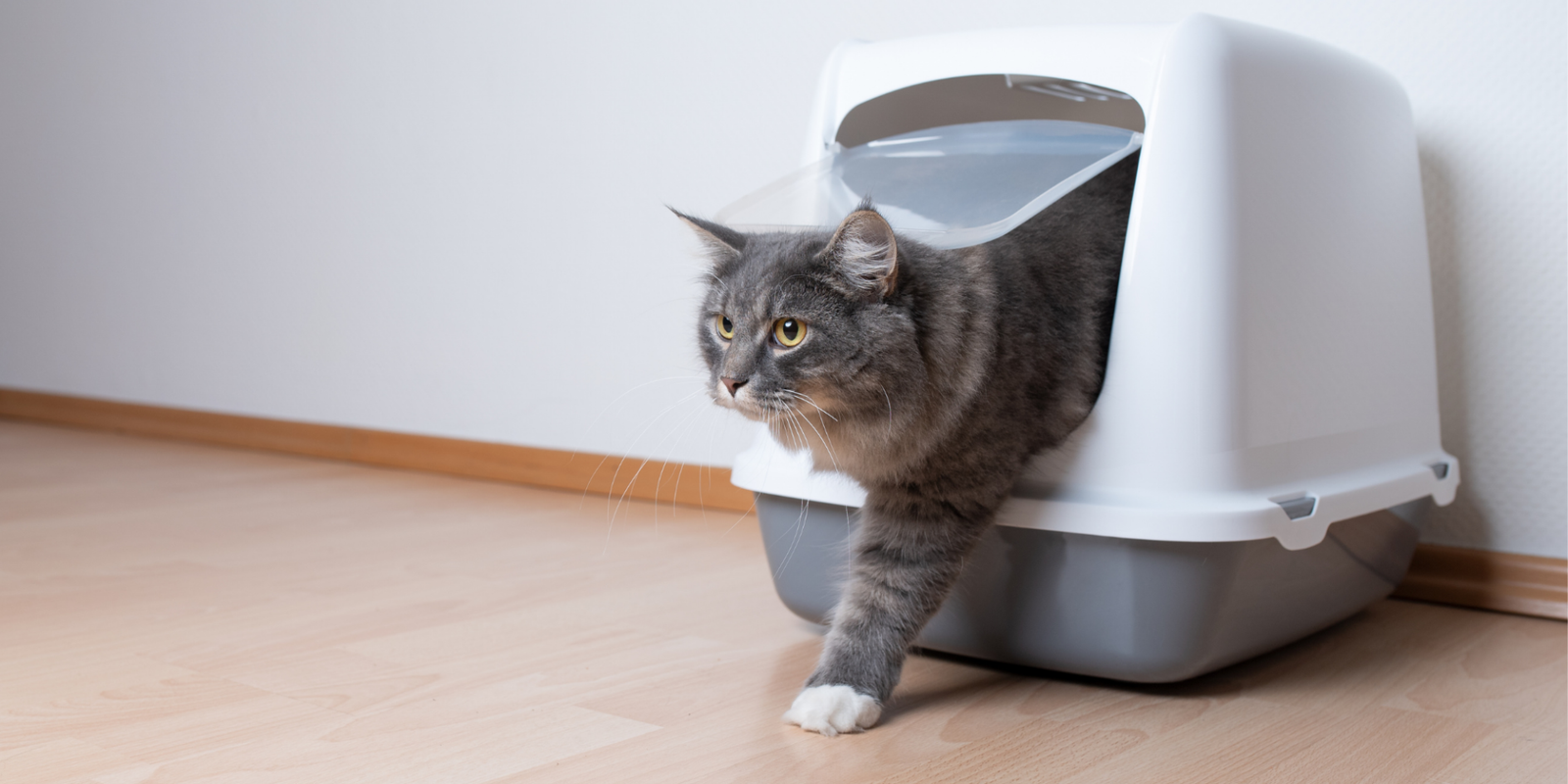
Not every household benefits. Skip the category if your cat is elderly or arthritic. The high entryways and moving parts are harder on stiff joints than a low-sided open box. Skip it if your cat is a dedicated litter-kicker who needs high walls; most automatics are open-top or low-entry by design. And skip it if you’re hoping to save money: over three years, a basic open box plus litter is still cheaper than any automatic. You’re buying time and odor control, not savings.
If the goal is a calmer pet-care routine, the other half of the equation is feeding. See our automatic pet feeder buying guide covers timed meals the same honest way. And if you want to watch how your cat actually reacts to a new box before committing, a pet camera pointed at the litter area answers the question in a day.

Frequently asked questions
Do self-cleaning litter boxes smell less?
They smell different, not zero. Sealed drawers and covered traps contain odor between emptyings better than an open box, and crystal litter dehydrates waste which helps. But a full waste drawer smells like what it is. Empty it on schedule and the advantage holds.
How long before my cat uses it?
Most brands suggest a transition of one to two weeks: run the new box unplugged next to the old one, then power it on once the cat is using it voluntarily. Cats that startle at the cycle noise may need longer. A small number of cats never accept the mechanism. This is what trial periods exist for.
Can two cats share one automatic box?
The general rule (one box per cat, plus one) still applies. The Litter-Robot 4 is rated for up to four cats, and multi-cat households are where automatics earn their keep. With rake systems, expect tray replacements to come roughly twice as often with two cats.
What happens in a power outage?
The box stops cycling and works as a regular litter box until power returns. Waste sits until the next cycle. It’s a minor point, but worth knowing if your area loses power often.
How we research
Fetchvera compares manufacturer-published specifications: dimensions, weight limits, litter compatibility, and pricing as stated by the brands and major retailers. We don’t run lab tests on pet products. When a brand publishes a number, we report it; when it doesn’t, we say so.