
As an Amazon Associate, Fetchvera earns from qualifying purchases. We research published specs — we don’t accept free products or paid placements.
A pet camera should answer one question well: what’s my pet doing right now, and are they okay? Everything else — treat tossing, barking alerts, cloud clips — is either genuinely useful or expensive decoration. Here’s how to tell the difference.
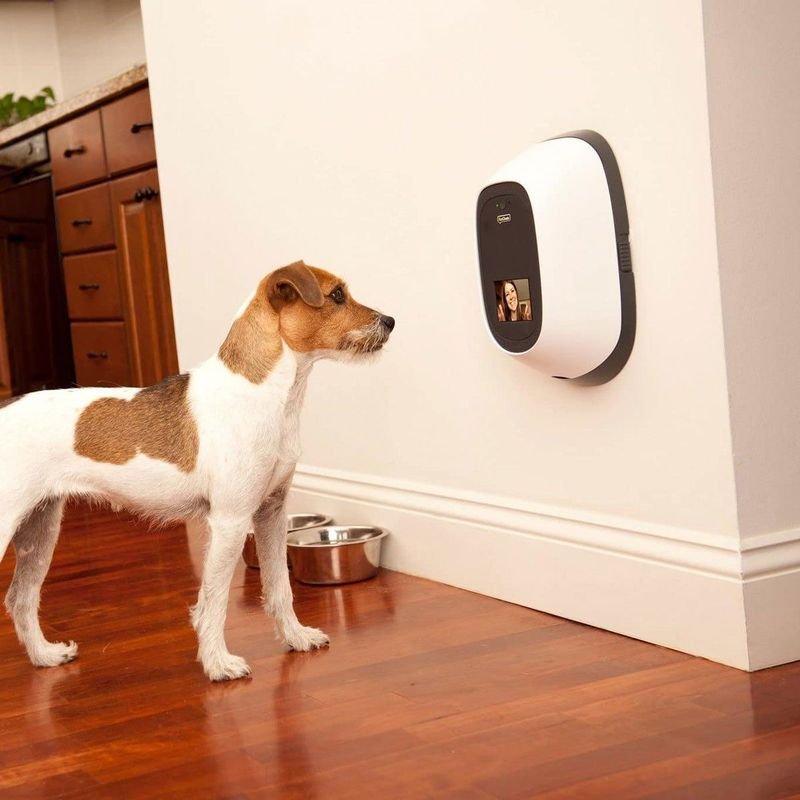
Resolution and field of view
1080p Full HD is the current baseline for pet cameras that take themselves seriously. The Furbo 360° Dog Camera pairs 1080p with a 160° wide-angle lens and 4x digital zoom, which matters because pets don’t sit still for the camera — a wide view plus zoom lets you actually find the cat behind the couch. A rotating 360° base, like Furbo’s, covers a whole room without you needing to reposition anything.
Don’t overpay for resolution alone. A 2K sensor with a narrow lens and no night vision is worse than 1080p that sees in the dark. Which brings us to…
Night vision: non-negotiable
Pets are most active at dawn, dusk, and the middle of the night — exactly when your living room is dark. Infrared LED night vision is standard on serious pet cameras; Furbo’s 360 line adds color night vision, which makes it easier to tell whether that dark shape is your dog or a pillow. If a camera lists “night vision” without saying infrared or specifying range, treat it as a checkbox feature, not a real one.
Two-way audio (and why quality matters)
Nearly every pet camera advertises two-way audio: you hear your pet, you talk back. In practice, cheap microphones pick up more room echo than barking, and tinny speakers can startle an anxious dog more than they soothe. Furbo publishes a high-quality microphone and built-in speaker with noise and echo suppression, plus a customizable “snack call” chime — the details that separate a usable intercom from a gimmick.
Honest expectation-setting: two-way audio calms some dogs and winds up others. If your dog has separation anxiety, test it while you’re home first.

Treat tossing: fun, but check the mechanics
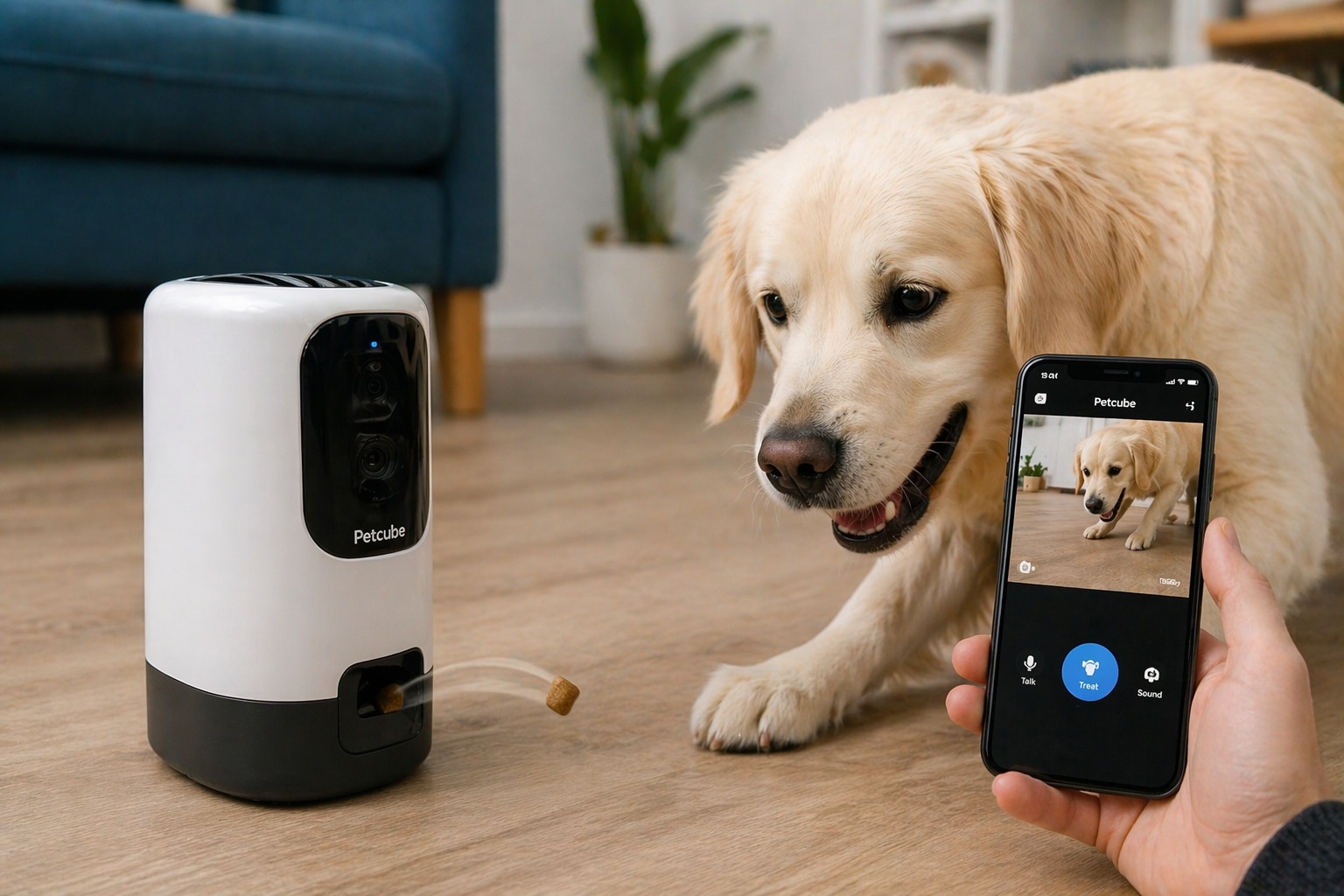
Treat dispensers are the signature pet-camera feature. Furbo’s holds about 100 pieces and tosses on command from the app; the treats need to be round and around 1 cm (0.4 in) in diameter. That’s the detail to check on any model: treat size compatibility, hopper capacity, and whether the mechanism jams. A camera whose tosser only works with one specific treat shape is a camera you’ll stop using.
Alerts and subscriptions: read before you buy
This is where pricing gets tricky. Furbo includes barking alerts with no subscription — the camera detects barking and pushes a notification, with adjustable sensitivity. The optional Furbo Dog Nanny subscription adds cloud recording, more smart alerts (activity, person detection), and a daily diary. Core functions — live view, two-way talk, treat tossing, barking alerts — keep working without it.
The general rule: figure out which features are free forever and which sit behind the paywall before you buy. A camera that’s useless without a $7/month plan is a very different purchase from one where the subscription is genuinely optional.
Connectivity and placement
Most pet cameras need 2.4 GHz Wi-Fi (Furbo specifies 802.11 b/g/n plus Bluetooth Low Energy for setup) and a constant power outlet — they’re not battery devices. Furbo recommends at least 2 Mbps upload speed for smooth streaming. Plan your placement around outlets and Wi-Fi strength, not just where the pet hangs out; a camera that buffers every ten seconds won’t get watched.
What we’d look for, by use case
For separation anxiety: Prioritize reliable two-way audio and barking alerts over treat tossing. You want to know the moment distress starts, not ten minutes later.
For multi-pet households: A 360° rotating camera with auto-tracking earns its keep — one camera can follow whichever animal is moving instead of staring at an empty rug.
For training and behavior: Cloud recording (usually subscription) matters more than live view. You can’t watch 8 hours of footage in real time, but you can review the 20 minutes before the couch got chewed.
The bottom line
Buy for the free-tier feature set, not the subscription brochure. A camera with solid 1080p, real infrared night vision, working two-way audio, and free basic alerts is useful on day one with no ongoing cost. Everything above that should solve a problem you actually have.
Compare cameras against your pet’s needs with our Pet Tech Finder, or keep reading: our GPS tracker buying guide covers the other half of the “where’s my pet” question, and our automatic feeder guide handles mealtime.
2 thoughts on “Pet Cameras: The Features Worth Paying For”
Comments are closed.